
Absurdity is the point
Why so serious, Psychiatry?

I find the whole discussion surrounding psychiatric diagnosis dull and uninteresting. This is not because the subject is fundamentally about a manual – I love a good deep dive into procedural instructions. It also isn’t because I think the subject of diagnosis is unimportant – it is, and there are very clever people making very clever points on all sides. Neither is my lack of interest in diagnosis because I believe the subject is somehow uncontroversial. Indeed, they say that if you whisper “DSM” three times the ghost of improper diagnosis past haunts you by constantly exclaiming “GET RID OF THE DSM!!!” without providing any viable alternative.
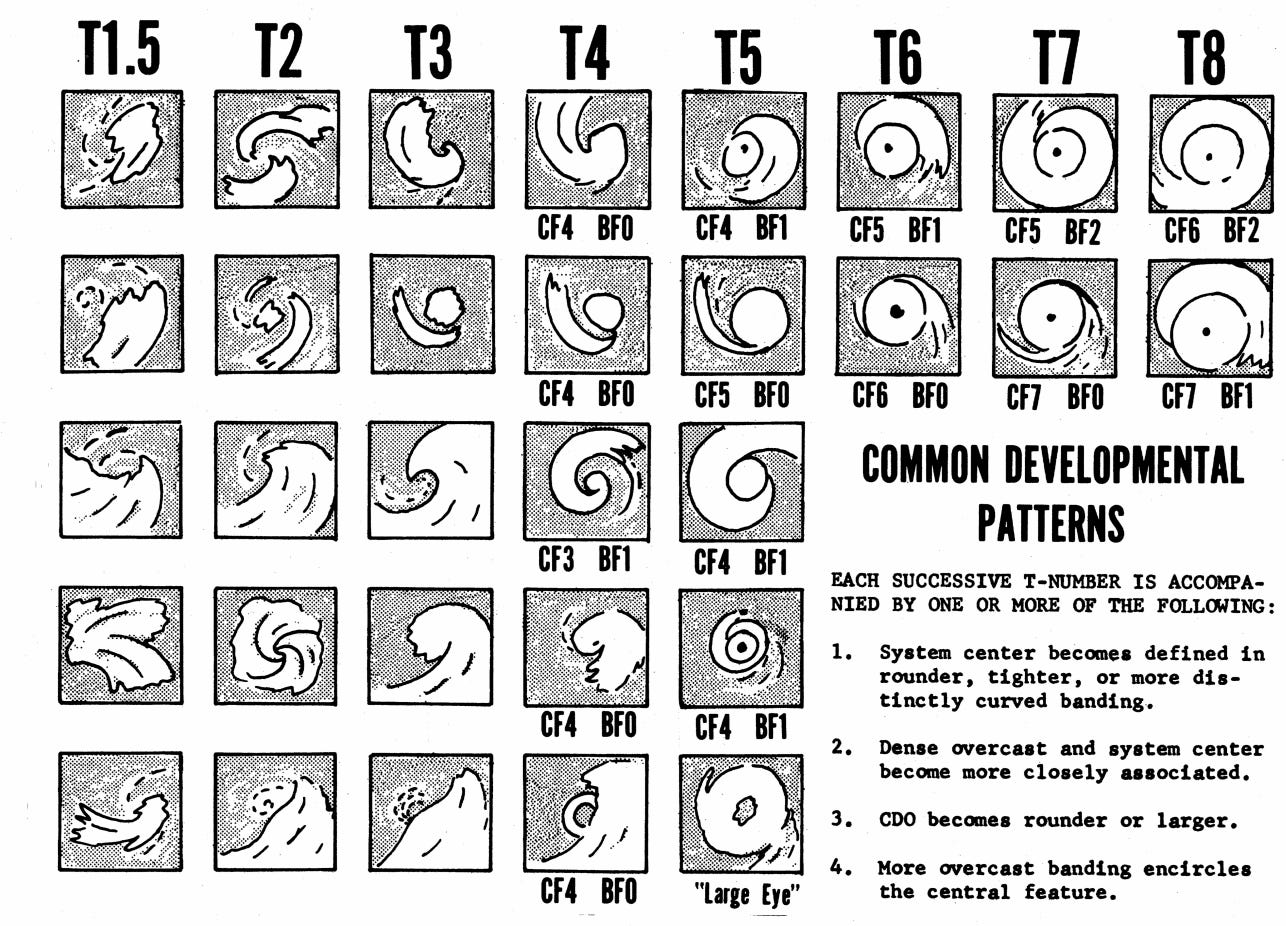
I find diagnosis discourse dull and uninteresting because it is mostly serious discussion about ideas that vary by one or two shades on the absurdity chromatic scale. Yes, HiTOP appears to be a clever alternative way of diagnosing conditions, and network models push past the conventional monochrome. But why hasn’t anyone written an article about what we could learn from the categorisation of tropical storms to diagnose mental ones, for example?
At face value, this appears absurd. What do swirling masses of air and water vapour have to do with mental illness? But to my physics brain, this is the most obvious place to explore. A brain in the throes of mental illness is a complex dynamical system in an extreme state that we currently classify through qualitative methods. A tropical storm is a complex dynamical system in an extreme state that we currently classify through qualitative and quantitative methods. An article about the lessons that psychiatry could learn from how meteorologists combine quantitative and qualitative information for accurate classification would be incredibly interesting, to me at least.1

The weird and wonderful world of physics
In contrast to the stern, emotive nature of my experience within psychiatry, my time in physics contained many goofy and odd occurrences. Whether academics using strange analogies,2 the odd hobbies of students, or enthusiastic members of the public with off-the-wall personalities, absurdity is the norm. So much so, that when I decided to meditate under my PhD office desk by bringing in a pillow and lying on the floor, not one person questioned it. It was just another physicist doing a weird thing.
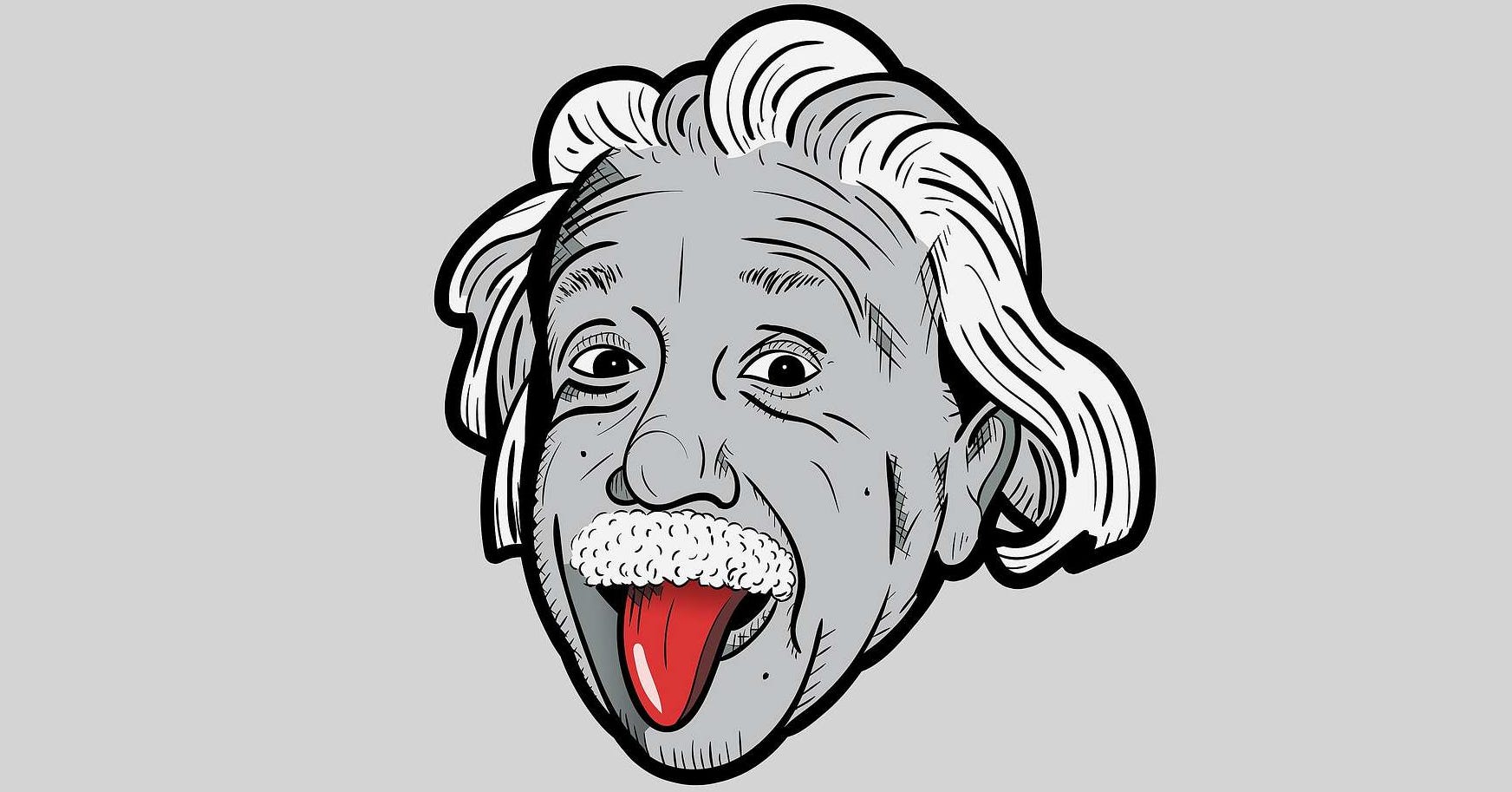
Many famous physicists are known to be quirky characters. There was Schrodinger with his slicked back hair and small round glasses,3 Feynman with his reputation for wacky adventures,4 Einstein and his “mad-scientist” hairstyle,5 to name but a few. Let us not forget famous physics educators such as Walter Lewin6 and Tatiana Erukhimova,7 who are known for their energetically odd styles.
One could argue that the subject of physics attracts absurd characters because the universe itself is absurd.8 But this would be missing the point. It matters not why physicists tend to have absurd characteristics, but what the embrace of absurdity allows a physicist to do.
Exploration through absurdity
I think it is probably safe to say that no psychiatrist has ever considered how moth-human hybrids could evolve, or how a horse could be launched into space. Of course they haven’t. With so much suffering and death associated with mental illness, surely there are more important things to think about?
Perhaps. The thing is though, we don’t need every psychiatrist thinking about the same important things. If they are all looking straight across the same epistemic chasm, every psychiatrist misses the bridges to their left and right.
What I think physicists have figured out is that slightly absurd premises are one of the best ways to explore our complex, connected universe. Take launching a horse into space. To figure out how and why a horse would be launched into space, I covered: public policy, the history of art, photography & optical principles, psychiatric medication effects, kangaroo physiology, the Mongolian empire, types and characteristics of horse breeds, horse movement mechanics, horse digestion, astrobotany, microbiology, biochemistry, physiological/behavioural changes in microgravity, spacecraft science, the Mongolian space agency, Mongolian population density research and, most importantly, crystal growth in space.
While trying to figure out how microgravity affected horse digestion, I stumbled upon protein crystallisation in space, which subsequently led to drug development in space. New psychiatric medications are few and far between – it is a significant problem. Who knows? Perhaps space psychiatric drug development is a future avenue to explore.9
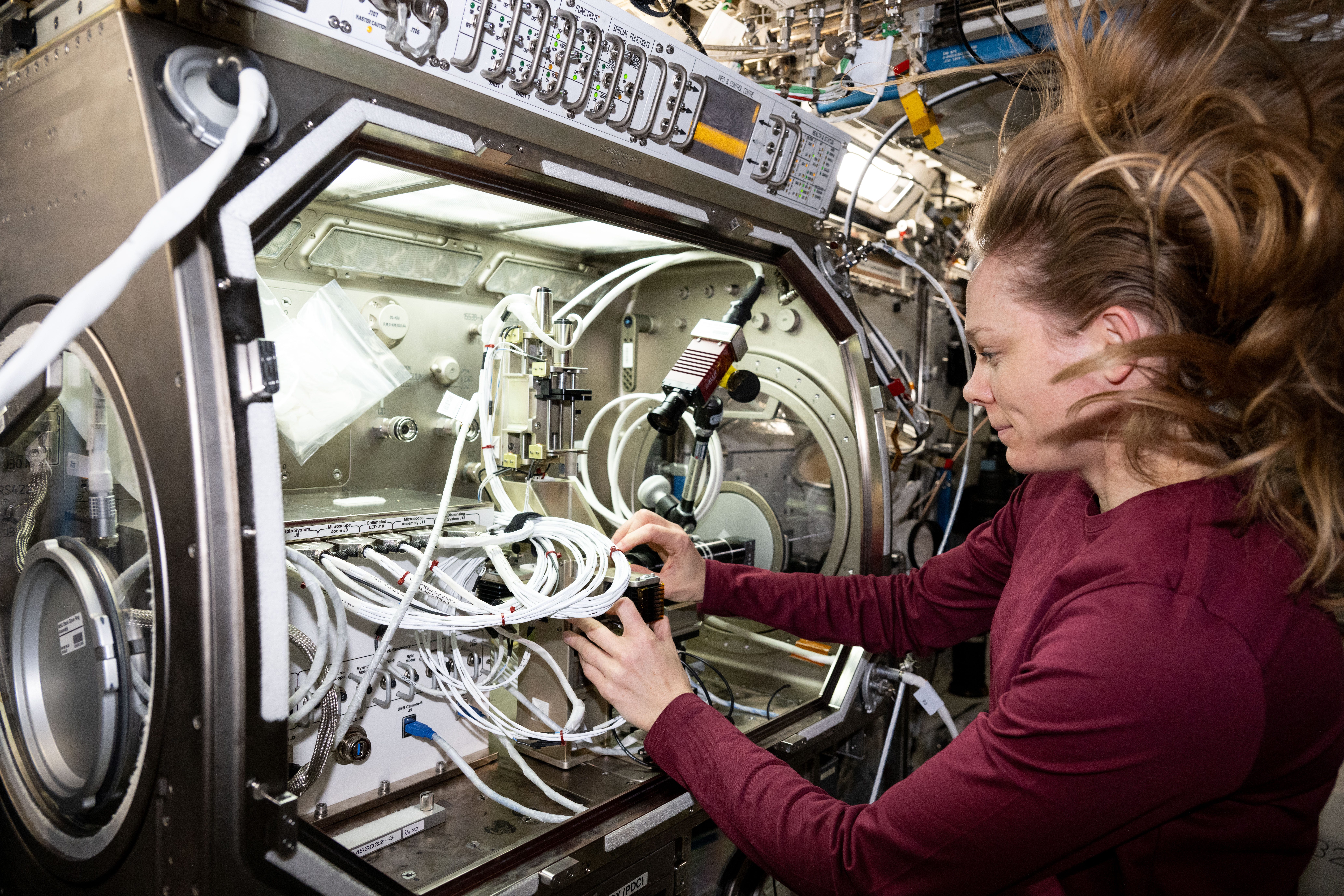
If I had never asked the question, "How do you get a horse into space?" I would never have realised that space drug development was a thing. How many psychiatrists are aware of it, I wonder?
A spoonful of ridiculousness
I use absurd premises to facilitate the discovery of niche, disparate links between subject areas. Links that no reasonable person would ever think about, even if they had 200,000 chimps constantly typing on 200,000 typewriters until the end of the universe.
I do not, however, use absurdities completely removed from reality. The premises are breaking tools. They break my current mental model of reality just enough for me to be able to reconstruct a new model through the discovery of new links. I chose 1% moth, not 50% moth and 40% elephant. I chose a horse launched into orbit, not to the centre of the galaxy in a dessert spoon. Stray too far into randomness, and the connections lose contact with reality.
The method is perhaps best thought of as an exploratory thought experiment – where the primary aim is to force contact between areas that wouldn’t normally meet, without descending into chaos.10 While there don’t seem to be any studies looking directly at absurd premises for the discovery of disparate idea connections, indirect research on curiosity and knowledge exploration suggests there may be method to my constrained madness.11
Breaking through the absurd barrier
It is not easy to embrace tractable absurdness. I remember as a physics undergrad how challenging it was to let go of the mental models that I had relied upon my entire life, so that I could understand how the fundamental gears of the universe turn. I think every physicist finds it difficult to deal with the uncomfortable feeling of the ground shifting beneath one’s feet. But if you do, if you let the foundations of your mind rearrange, there is an entire fascinating universe out there to discover. I don’t think I’ve known a better feeling than when weaving disparate threads into a new idea.
Whenever I dive into the world of psychiatry, it feels stagnant, like I am breathing in thick, humid air. It is a subject stuck between the present and the past, unable to find a future. Maybe a small dose of absurdity is just the tincture that could release psychiatry from its stubborn ills.
Why do I feel like I am going to be the one who writes this article?
For instance, during one of my university lectures on particle physics, the professor giving the class spontaneously decided to explain a behaviour of a subatomic particle through cats and “cat rays”.
Who also, it is important to remember, allegedly sexually abused teenage girls.
Who also, it is important to remember, allegedly was a misogynist, sexist, and abusive to people he felt were beneath him.
Who also, it is important to remember, allegedly treated his first wife terribly (amongst other controversies).
Who also, it is important to remember, was removed from his post by MIT for alleged online sexual harassment of a student.
Who also, it is important to remember… nope, nothing. Who’d have thunk it? The one woman in this list was the only one who appears to have no allegations of misogyny, or, in fact, anything.
If the previous footnotes tell a story, it is that physics has done remarkably poorly at including women, and the subject appears to have a massive misogyny problem. While this article is focused on the usefulness of absurdity, I have no doubt there are many areas where physics needs to become more serious.
While there are definitely weird things to get your head around, most of physics research is surprisingly dull. I spent most of my time on the electron microscope trying to make a round bright green dot rounder, brighter and greener.
Again, why do I feel like I’m going to be the one to write this article?
Rather than a conventional thought experiment, where the aim is to bring forth new understanding about the world through the examination of an imaginary problem.
For example, violation of expectation can lead to increased curiosity and subsequently knowledge exploration. But only if, according to Lewry et al. (2022), these violations are small.
This is a small masterpiece, and so is the one about the horse, which I totally missed. I've been thinking (and writing a bit) about the DSM. How neat and tidy it is, the way people embrace their diagnosis, and what's missing. My schizophrenic brother grew up way before all this, he was from another world. His illusions/delusions were full of magic and poetry, art and philosophy, and he went down hard in life, died a terrible lonely death, ranting and raving about his visions and "the truth" which continues to feels more and more true. btw he also talked to cats, and about their x-ray vision (the cat rays, like your professor). I'm just sayin' who's to say what's crazy and what's genius, right? He would have loved your piece about the horse, I almost cried thinking about it.
This is a deep vein - we have slavishly followed the biomedical model into the halls of Mordant Empiricism and misplaced Joy. In my experience I would argue that diagnosis matters but more in the way of communicating in shorthand with other treaters than in actually treating patients. Each one of us is a horse in space …